
The American Academy of Pediatrics (AAP) just published its first major update to pediatric iron deficiency guidance in over a decade. Their new clinical report, Pediatrics, Prevention, Screening, Diagnosis, and Treatment of Iron Deficiency and Iron Deficiency Anemia in Infants, Children, and Adolescents, replaces the 2010 version and rewrites the playbook on screening, symptoms, and ferritin thresholds. This is worth your attention.
Quick Note: This is American guidance, and Canada doesn’t have an identical national standard. Still, it’s a useful, evidence-based resource to draw from in your own practice.
How This Differs from the 2010 Reports
|
|
2010 Report |
2026 Report |
|
Age scope |
Birth to 3 years |
Infants through adolescents |
|
Screening trigger |
Universal at 12 months |
9-12 mo (breastfed) / 15-18 mo (formula-fed) |
|
First-line test |
Hemoglobin; ferritin secondary |
CBC and ferritin together, by default |
|
Ferritin thresholds |
No fixed universal cutoff |
≤ 20 ng/mL (children); ≤ 30 ng/mL (adolescents/menstruating) (equivalent to ≤ 20 µg/L and ≤ 30 µg/L on Canadian lab reports) |
|
Adolescents |
Not addressed |
Universal screening 1 year post menarche, by age 14 |
|
Treatment guidance |
Limited |
Expanded, including when to consider IV iron |
One change worth citing on its own:
The AAP is now recommending CBC AND serum ferritin TOGETHER at screening, not a CBC or hemoglobin alone.
The reasoning is straightforward. Hemoglobin only catches iron deficiency once it’s progressed to anemia, while ferritin can flag depleted iron stores well before that point, which matters given the report’s emphasis on cognitive effects showing up before hemoglobin ever drops. A normal CBC on its own is no longer treated as reassurance that iron status is fine.
What's Changed in Screening (per AAP)

- Infants primarily fed human milk: screen between 9 and 12 months
- Formula-fed infants: screen at 15 to 18 months
- Risk-factor monitoring continues at every well-child visit through age 4 (excessive milk intake, inadequate dietary iron)
- Menstruating adolescents: universal CBC and ferritin at least 1 year post menarche, no later than age 14, with continued screening after that if risk factors like heavy menstrual bleeding or a low-iron diet are present
- Revised ferritin thresholds: 20 ng/mL or lower for infants, children, and school-aged children; 30 ng/mL or lower for adolescents and all menstruating individuals

What's Worth Asking About at the Visit
The report is explicit that these symptoms should prompt lab work up on their own, even without classic pallor or growth concerns:
- Irritability, usually alongside other symptoms rather than in isolation
- Poor concentration and attention difficulties, showing up as poor school performance, inattention, or a drop-off in interest in activities the child used to enjoy
- Progressive fatigue, which can look like increased napping or fussiness in young children
- Shortness of breath, headache, or dizziness, particularly in adolescents
- Pica: dirt, rocks, paper, wipes, or cardboard in young children; ice, tissue, or other starchy non-food items in older adolescents
Where the Guidance Could Go Further
A few areas worth flagging as still needing enhancement.
Testing at Birth for the Highest-Risk Infants
The report recommends prophylactic iron supplementation for preterm infants (by 2 weeks of life) and acknowledges that infants born to mothers with anemia, hypertension with IUGR, or diabetes are at higher risk of low fetal iron stores, but it doesn't call for baseline lab confirmation (CBC and ferritin) in these infants. Supplementation dosing is generic and doesn't account for how depleted a given baby's stores were at birth, which is a real gap given how much the rest of the report emphasizes catching deficiency at the ferritin level rather than waiting for anemia to appear.
Ferritin as an Acute-Phase Reactant
The report doesn't offer much practical guidance on interpreting ferritin in the presence of concurrent illness or inflammation, which was addressed in more depth in the 2010 report (often paired with CRP).
Reversibility of Cognitive Effects
The report flags that cognitive effects can appear before anemia and may not fully reverse with treatment but doesn't offer clear guidance on what to do differently for a child who is already showing those signs, beyond earlier detection.
Where BioFe® Iron Fits In
With more kids being caught earlier with borderline ferritin levels under these new thresholds, tolerability matters more than ever. A child who can’t, or won’t, stay on their iron long enough for it to work doesn't benefit from an earlier diagnosis, so the choice of formulation is just as clinically relevant as the decision to screen and treat in the first place.
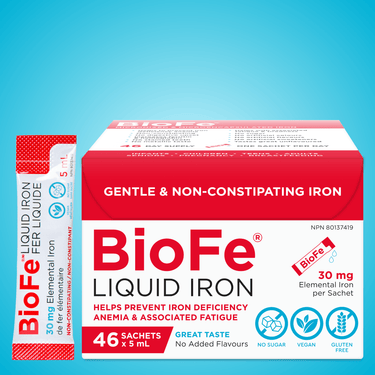
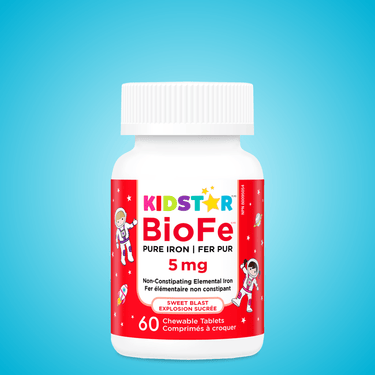
BioFe® iron is a micronized, microencapsulated iron III pyrophosphate formulated specifically for treatment compliance and efficacy. The microencapsulation reduces stomach irritation, prevents interactions with the gut lining, and delivers iron to the small intestine for absorption, which eliminates nausea, cramping, constipation, and metallic taste that cause kids (and parents) to quit traditional iron.
Dosing is easily scaled from drops through sachets as a child grows, so you're not switching formulations or guessing at conversions as they age out of one product.

No Constipation • No Upset Stomach • No Stained Teeth • No Metallic Taste
Download Our BioFe® Iron Product Reference Sheet