
Iron requirements and risk factors shift rapidly throughout early childhood, making certain developmental stages particularly vulnerable to iron insufficiency. Understanding when and why these risks occur allows practitioners to anticipate concerns, tailor screening, and provide timely nutrition guidance or supplementation when appropriate.
Here is a practical overview of iron needs across key developmental stages, with considerations that can be applied in everyday pediatric practice.
High-Risk Windows for Iron Insufficiency
Iron deficiency does not occur evenly across childhood. Risk peaks during periods of rapid growth, dietary transition, and changing feeding behaviours.
Infancy (6–12 Months)
By mid-infancy, iron stores accumulated during gestation begin to decline while requirements increase significantly to support rapid growth and neurodevelopment. During this stage, iron intake becomes highly dependent on the quality and quantity of complementary foods.
According to Blood Advances (2021), more than 50% of pregnant women are iron deficient. Knowing if moms had optimal prenatal iron levels is key to understanding infant iron deficiency at birth.

Clinical considerations include:
- Adequacy and timing of iron-rich complementary foods
- Reliance on breastmilk without sufficient dietary iron sources
- Increased iron needs relative to body size
|
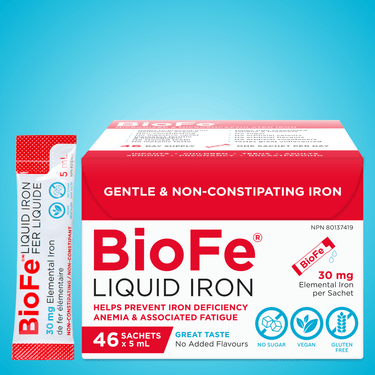
BioFe Iron Drops for Infants & Children
|
 NPN 80094706 |
Toddlerhood (1-3 Years)
Toddlerhood represents one of the highest-risk periods for iron insufficiency. Rapid growth continues, while dietary patterns often become more variable. Increased autonomy, selective eating, and higher milk/dairy intake can all contribute to reduced iron intake.
Common contributing factors include:
- Excessive cow’s milk intake displacing iron-rich foods
- Limited acceptance of meats and other iron sources
- Irregular eating patterns and small portion sizes


Early Childhood (3-5 Years)
While growth velocity slows slightly, iron needs remain significant. Dietary patterns may stabilize, or become increasingly selective, making iron insufficiency harder to detect without targeted assessment.
Iron depletion at this stage may go unrecognized due to:
- Fewer routine nutrition-focused screenings
- Assumptions of dietary adequacy
- Subclinical deficiency without overt anemia
|
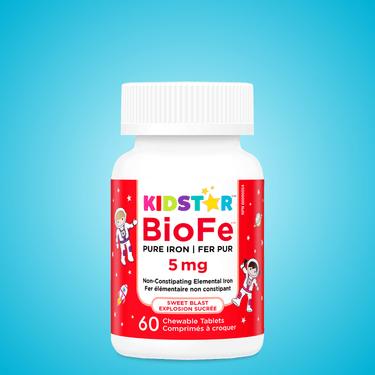
Tiny Chewable Tablets
|
 |
 NPN 80095054 |
 NPN 80110110 |
Feeding Transitions as Critical Checkpoints

Feeding transitions represent predictable moments of nutritional vulnerability. Shifts from breastmilk or formula to solids, bottle to cup, and child-specific foods to family meals can unintentionally reduce iron intake if not supported with guidance.
Incorporating dietary history and feeding pattern review during these transitions can help identify children at risk before iron depletion progresses.
Practice Pearls
- View iron risk through a developmental lens, not a single age cut-off
- Screen iron status during feeding transitions and rapid growth periods, not only at routine milestones
- Assess milk/dairy intake in the context of overall dietary variety and iron sources
- Consider growth velocity, dietary patterns, and feeding behaviours when evaluating iron needs
- Reinforce iron-rich foods and age-appropriate supplementation when intake alone is unlikely to meet requirements
By recognizing predictable risk periods and integrating nutrition assessment into routine care, practitioners can play a key role in supporting optimal iron status throughout early childhood.
BioFe® Iron Overcomes Taste & Sensory Aversion to Ensure Treatment Compliance

We have heard from many Practitioners that they know patients are not taking their iron supplements because their iron levels are not increasing. Overcoming taste and sensory aversion is one of the greatest challenges for treatment compliance. If patients are not taking their iron supplements, their iron levels will never improve. BioFe® iron provides a great-tasting iron with no metallic taste that is available in multiple formats to provide flexible supplementation options for patients.
Download Our Free Product Comparison Chart